Famicom Hidden Gems to Try in Your Browser
Some of the most interesting 8-bit games never became household names outside Japan. The Famicom library is full of platformers, shooters, horror RPGs, and strange Konami experiments that pushed the hardware much harder than many players expect from the NES era.
This guide uses the Renkai Games video "11 Underrated 8-BIT Games That Pushed the Hardware to the Absolute Limit!" as research inspiration, then turns it into a practical browser-play shortlist for Rebit. The goal is not to copy the video's countdown. It is to help you decide which Japanese Famicom hidden gems are worth testing, saving, and keeping in your own browser library.
Use your own legally owned game files, homebrew, or legal re-releases where available. Rebit does not provide copyrighted ROM downloads, cartridge dumps, translation patches, or links to ROM sources.
Quick answer
If you want Famicom hidden gems that still work well in browser play, start with these categories:
- Precision platformers: Gimmick!, Moon Crystal, Mitsume ga Tooru.
- Fast shooters: Crisis Force, Recca: Summer Carnival '92.
- Weird Konami experiments: Wai Wai World 2, Yume Penguin Monogatari, Bio Miracle Bokutte Upa.
- Darker or harder picks: Holy Diver, Sweet Home, Splatterhouse: Wanpaku Graffiti.
- Browser rule: test controls and one save path before committing to a long or difficult game.
Why Japanese Famicom games are worth revisiting
Many Famicom-only releases were skipped in the West because of licensing, localization cost, limited cartridge runs, or genre risk. That does not mean they were minor games. Some arrived late in the hardware cycle, when developers knew how to squeeze more color, animation, scrolling, and music out of the machine.
For modern players, that makes them perfect discovery games. You can play NES games online in short sessions, compare control feel quickly, and build a focused library instead of leaving a pile of mystery files in a folder.
The main thing is to separate curiosity from commitment:
- Sample several games for five to ten minutes.
- Keep only the ones that feel good with your current controls.
- Save properly before any long campaign or high-difficulty run.
- Avoid random download sites and use only files you are legally allowed to use.
Best Famicom hidden gems for quick browser testing
These games are good first tests because you can understand the appeal quickly.
Gimmick!
Gimmick! looks cute, but it is not casual. Its star projectile behaves like a physics object: you can attack with it, bounce it, ride it, and use it to solve movement problems. That makes the game feel unusually expressive for an 8-bit platformer.
In Rebit, this is a strong first test for directional precision. If the controls feel off, you will notice immediately. Create a manual save state after a clean checkpoint so you can practice difficult jumps without restarting too much.
Moon Crystal
Moon Crystal is a side-scrolling action game with unusually smooth animation and cinematic staging for the hardware. It is easy to recommend as a visual showcase because the character movement feels more graceful than many Famicom platformers.
It is also a good browser pick because the structure is straightforward: launch, test movement, clear a stage, save your place, and decide whether it belongs in your regular rotation.
Mitsume ga Tooru
Mitsume ga Tooru is colorful, strange, and mechanically playful. Its spear/platform mechanic gives the action a different rhythm from standard run-and-jump games, and the visuals make it stand out instantly in a library.
This is the game I used for the post thumbnail: one clean in-game screenshot from the source video, cropped to remove video labels and keep the focus on gameplay.
Best technical showpieces
Some Famicom hidden gems are interesting because they feel impossible for the machine.
Crisis Force
Crisis Force is a vertical shooter with large effects, transformations, dramatic scrolling, and a more forgiving hit structure than many shooters of the era. It is a good choice if you want to test how intense NES/Famicom action feels in the browser.
For Rebit, shooters like this are useful because they reveal input feel quickly. If movement, firing, and screen scaling all feel right, you can trust the setup for less frantic games too.
Recca: Summer Carnival '92
Recca is famous for speed and screen chaos. It is not the first Famicom shooter most people should play, but it is one of the best stress tests for reflexes, visual clarity, and audio intensity.
Use save states for practice, not as a replacement for learning. If you want a fair challenge, checkpoint before a section and replay it until the movement pattern makes sense.
Weird Konami picks that are still fun to sample
Konami's Famicom output included more than obvious action classics. Several of its Japan-focused releases are still interesting because they take strange ideas seriously.
Wai Wai World 2
Wai Wai World 2 is a crossover platformer built around transformations into Konami characters and references. That makes it a great curiosity game: even if you do not know every cameo, the constant change gives it variety.
Browser play fits this kind of game well because you can sample a few stages, screenshot memorable moments, and return later without making it a full campaign.
Yume Penguin Monogatari
Yume Penguin Monogatari is built around a weight-loss comedy premise that sounds ridiculous, but the actual game is a polished mix of platforming, shooting, and meter management. It is a strong reminder that hidden gems are not always grim collector trophies; sometimes they are bright, funny, and mechanically specific.
Bio Miracle Bokutte Upa
Bio Miracle Bokutte Upa uses a baby with a magic rattle, inflated enemies, balloon-like movement, and colorful level design. It is easy to understand quickly and makes a good short-session game if you want something lighter than a hard action platformer.
Darker and harder Famicom games need a save plan
Not every game on this list is friendly. Some are best approached with patience and a clear save routine.
Holy Diver
Holy Diver has heavy-metal fantasy energy and a difficulty curve that can feel severe. It sits near the Castlevania side of action games, but with enough movement and spell differences to feel distinct.
Before a serious run, test your controls, create a manual state at a safe point, and expect to practice. This is not a game to start when you only have five minutes.
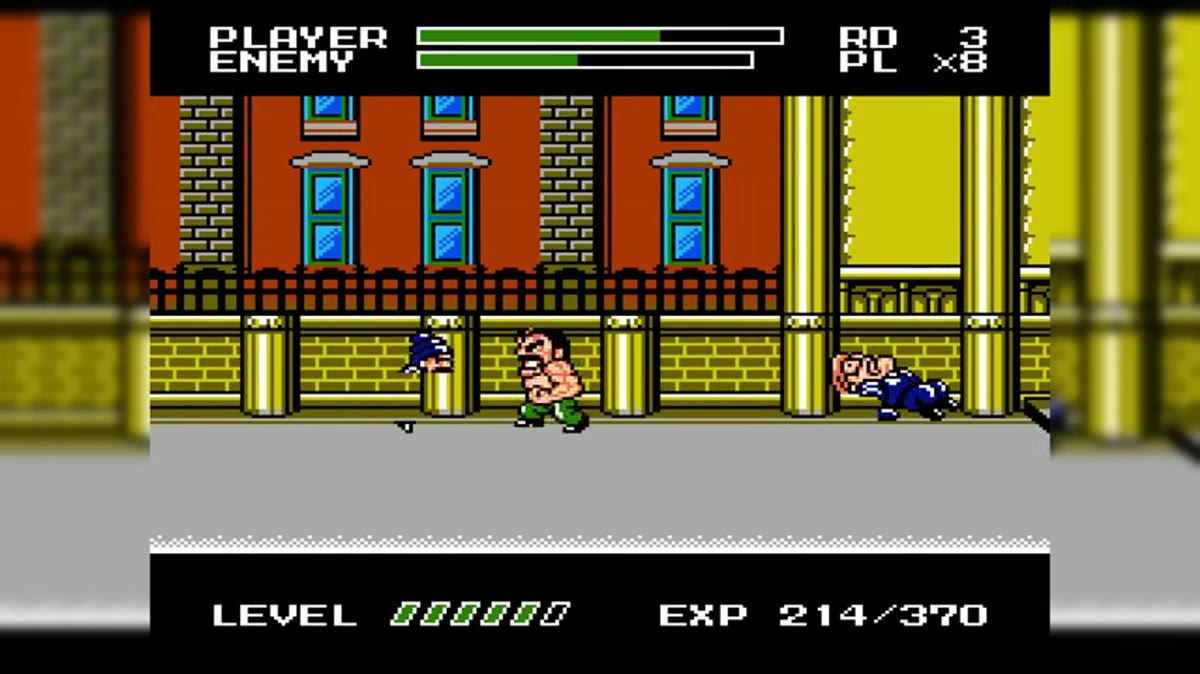
Splatterhouse: Wanpaku Graffiti
Instead of trying to reproduce arcade horror directly, Splatterhouse: Wanpaku Graffiti turns the idea into a parody full of strange enemy designs and horror references. It is more playful than scary, and that makes it easier to recommend as a curiosity pick.
Sweet Home
Sweet Home is the outlier: a horror RPG with limited resources, permanent consequences, mansion exploration, and ideas that later survival-horror games would build on. It is historically important, but it also needs more care than a quick platformer.
If you play a long RPG or adventure in Rebit, use the same save discipline you would use for any important retro campaign:
- Make a normal in-game save when the game supports it.
- Reload once to confirm the save works.
- Use manual save states as extra checkpoints.
- Export important saves before switching devices or browser profiles.
For a deeper breakdown, read save states vs in-game saves and the GBA RPG save checklist. The systems differ, but the habit is the same: test before you trust a long file.
Rebit workflow for Famicom and NES hidden gems
Use this clean workflow when you want to try Japanese Famicom games in Rebit:
- Sign in to Rebit.
- Upload your own legally owned
.nesfile through upload ROM and play online. - Confirm the game is detected as NES/Famicom-compatible.
- Open the game and test movement, jump, attack, start/select, and any rapid-fire needs.
- For difficult action games, create a manual save state at the first safe checkpoint.
- For adventure or RPG picks, make a normal in-game save first, then reload to confirm.
- Use cloud saves for retro games and the saves, screenshots, and cheats docs to review, export, or move progress.
- Keep a small shortlist. Hidden-gem discovery works better when you actually return to the games.
If you want more NES-era recommendations, read 21 best NES games of all time, NES co-op games to play online with friends, and NES platformers that still feel mechanically clean.
Browser-play checklist
Before you commit to a Famicom hidden gem:
- Confirm you are using your own legally owned game file, homebrew, or a legal release you are allowed to use.
- Launch the game once and check video/audio stability.
- Test all required buttons, especially start/select and rapid-fire-heavy actions.
- Play long enough to know whether the game is a short-session pick or a campaign.
- Create one manual save state at a safe checkpoint.
- For RPG/adventure games, test the normal in-game save flow.
- Export important saves before changing devices, clearing browser data, or switching setups.
FAQ
Can I play Japanese Famicom games in a browser?
Yes, if you have a legally owned compatible file that Rebit can run through its NES/Famicom-compatible browser emulator flow. Rebit does not provide ROM downloads, copyrighted game files, or links to obtain them.
Which Famicom hidden gems are best for quick sessions?
Start with Gimmick!, Moon Crystal, Mitsume ga Tooru, Bio Miracle Bokutte Upa, or Wai Wai World 2. They show their personality quickly and work well as short browser tests.
Which games need more save care?
Sweet Home, Holy Diver, Recca, and longer or harder action games need more care. Test controls first, use in-game saves where available, and keep manual states as safety checkpoints rather than your only progress record.
Do I need translation patches?
Some Japan-only games are playable without much text, while others are much easier with a legal patch workflow. Rebit does not provide patches or ROM sources. If you use a translation patch, follow the patch creator's instructions and only patch files you are legally allowed to use.
Final recommendation
Do not treat Famicom hidden gems like a checklist you must finish. Pick one technical showpiece, one precision platformer, one strange Konami game, and one darker challenge game. Test each in the browser, keep the ones that feel good, and build a small Rebit library you will actually revisit.
That is the best way to turn an obscure 8-bit video list into something useful: fewer mystery files, cleaner save habits, and a better chance of discovering a Famicom game that still feels special today.