How to Keep Old Save Data When You Patch a Pokemon ROM Hack
When players search for ROM hack keep old save data, they are usually at the risky moment before an update: the patched Pokemon-style ROM hack may become a different game file, while the progress they care about lives in a separate in-game save file or an emulator state. The safest move is not rushing into the patch. It is protecting the old progress first, then testing the patched version before trusting it with a long run.
This guide is for legally distributed patches applied to your own legally owned dumped game file. It does not provide games, ROMs, BIOS files, firmware, emulator cores, patch files, torrents, acquisition advice, source lists, or file-matching instructions. Save compatibility is not guaranteed; it depends on the hack author's update notes, the exact base game and revision, save format, emulator/core behavior, and where your character was saved.
Quick answer: back up the in-game save before changing the game file
To keep old save data after a ROM-hack patch, back up progress before you change the game file. Open the old version, save inside the game, export or copy the in-game/battery save file, and keep the old game file plus save in an untouched backup folder. A save state can help as a secondary recovery point, but it may be brittle after the patched ROM hack changes.
After applying a legally distributed patch to a copy of your own legally owned dumped game file outside Rebit, launch the patched version once before overwriting anything. Import or upload the supported in-game save only if needed, verify your location, party, items, and recent progress, then make a fresh in-game save and a fresh manual state in the patched version. If the hack author says the update requires a new game, stop there and do not force old progress into it.
Save state vs in-game save for ROM-hack updates
The first thing to separate is the layer of progress you are protecting.
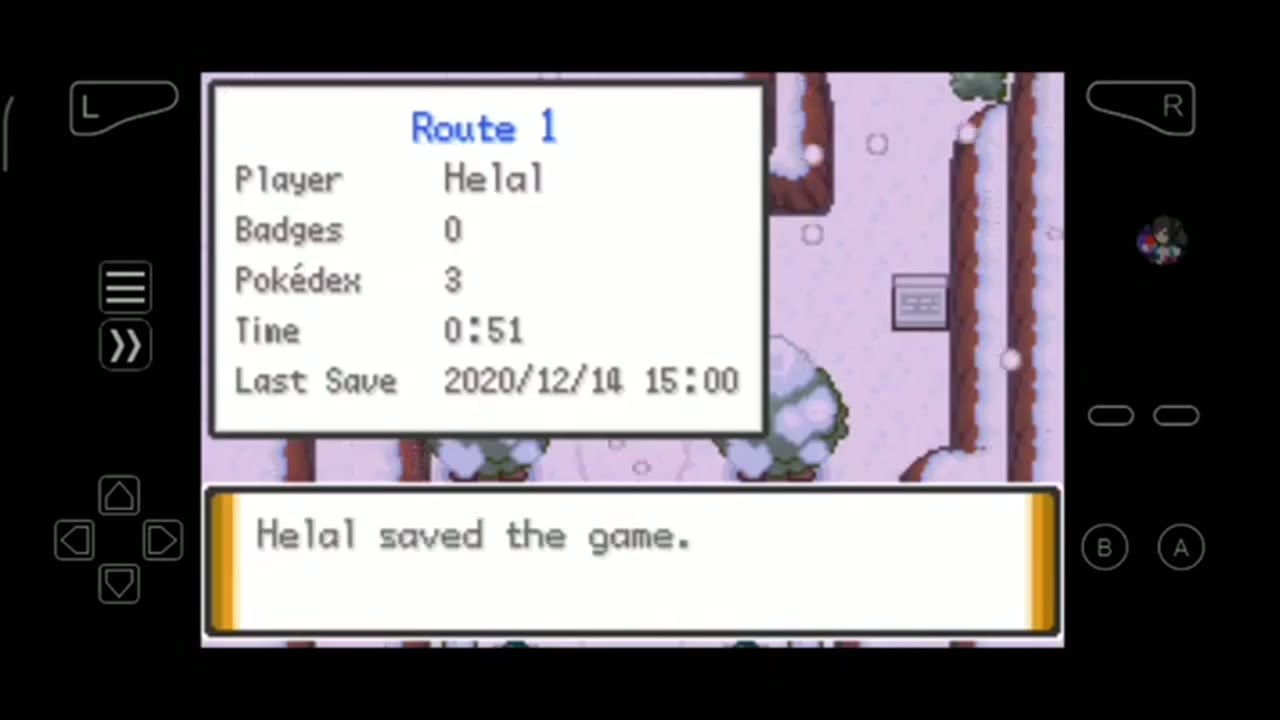
An in-game save, battery save, SRAM save, .sav, or .srm is the progress file the game expects when it boots normally. It usually represents what the game's own Continue screen, save slot, or save menu can read. When a Pokemon ROM hack patch save file is compatible across versions, this is usually the most important layer to preserve first.
A save state is different. It is an emulator snapshot of a moment in time: the current scene, memory, runtime state, and emulator conditions. Save states are useful before a boss, scripted event, risky route, or experiment, and Rebit's broader save states plus in-game saves workflow is designed around using both where supported. But after a patch changes the game data, an old state can load strangely, glitch, or fail even if the in-game save might still work.
That does not mean save states are useless. It means they should not be the only backup ROM hack save you keep before a version change. Treat the in-game save as the primary continuity file and the manual state as a secondary fallback.
Backup-first checklist before patching a ROM hack
Use this checklist before replacing, uploading, or continuing with a patched Pokemon-style ROM hack.
1. Read the hack author's save-compatibility notes
Start with the author's official update notes for the patch you already have legal access to. Look specifically for save-compatibility language: whether the update supports existing saves, requires a fresh start, has known broken areas, or expects progress to be saved from a particular kind of location.
Also confirm that the patch is meant for the same base game and revision as the one tied to your old save. This guide will not tell you where to obtain files or how to source-match them; the point is simply to avoid assuming that any patch and any old save belong together.
If the author says the update requires a new game, believe that note. A backup can protect the old run, but it cannot make an incompatible update safe.
2. Open the old version and save inside the game
Before changing anything, open the old ROM-hack version that currently loads your progress. Make a normal in-game save from a stable point. For a Pokemon-style hack, that usually means avoiding mid-battle moments, trades, link rooms, scripted transitions, cutscenes, or unusual event states.
The goal is to refresh the game-owned progress file while the old version still works. If the patched version later has trouble with a state or recent autosave, the normal in-game save gives you a cleaner place to test from.
3. Export, download, or copy the in-game save file
Now preserve the in-game save outside the live setup. Common examples include .sav or .srm files where the game, system, and emulator support them. Keep the wording precise: you are backing up a supported in-game save file, not assuming every emulator save format is portable everywhere.
In Rebit, the upload or export an in-game save file docs describe using an existing .srm or .sav from another emulator and exporting an in-game save after saving inside the game. That makes Rebit useful as a clearer save-management layer for supported files, but it is still your job to keep a backup copy and verify the result in the game.
4. Create a manual save state as a secondary fallback
If your emulator or Rebit workflow supports manual states, create one before patching. Label or remember what it represents: location, party, badges, playtime, or the last story beat. A manual state is valuable when you need a quick recovery point.
Just do not let the state replace the in-game save backup. States can depend on game identity, patch version, emulator/core behavior, runtime details, and state-slot assumptions. They are excellent safety nets, but they are more brittle around ROM-hack version changes.
5. Keep an untouched pre-patch backup folder
Create a backup folder that you do not edit during the patch attempt. Put copies of the old game file, the old in-game save, and any manual state files you care about in that folder. If you use several devices or browsers, also keep a simple note with non-sensitive progress markers: location, party, badges, key items, money, playtime, or the last major event.
Do not overwrite the only copy of the old game or the only copy of the save. A good backup is boring: it sits untouched while you experiment on duplicates.
6. Apply the legally distributed patch only to a copy
Patch a copy of your own legally owned dumped game file outside Rebit. Rebit is not being described here as a ROM-hack patcher, patch source, compatibility checker, or file converter. The patching step belongs to your own legal files and whatever legally distributed patch you already have.
Keep the old version intact until the patched game has launched, loaded the expected progress, survived several normal saves, and reopened successfully.
7. Launch the patched game before importing or overwriting saves
Before moving old progress into the patched setup, launch the patched game by itself. If the patched file does not start normally, stop. Do not overwrite save files while you are still unsure whether the game file is valid for your setup.
For supported browser play, Rebit's upload your legally owned game file page explains the private-library starting point. Uploading and launching can help you test a supported file in your library, but it does not prove the hack update is save-compatible.
8. Import or upload the backed-up in-game save only where supported
Once the patched version launches, use supported save-file workflows for the backed-up in-game save. Do not assume automatic migration between separate game entries, and do not assume an old state is safe to load just because the new game opens.
If you are using Rebit, work from a copy of the .sav or .srm where supported, then verify inside the game. Rebit can help organize the save workflow for supported games, but it does not guarantee every Pokemon ROM hack save data file, game revision, browser, emulator/core behavior, or patch version will accept every old save.
9. Verify progress before continuing the run
After the patched version sees the old save, compare real progress markers instead of trusting a filename. Check your character's location, party, items, badges or story flags, money, last major event, and playtime. Walk around a safe area. Open menus. Save normally again inside the patched version.
Then create a fresh manual state in the patched version. That new state belongs to the updated game file, so it is safer than continuing to rely on an old pre-patch state.
Keep the pre-patch backup until several normal saves and reloads work. If anything looks wrong, stop before overwriting more data.
Where Rebit helps with save continuity
Rebit fits best as a browser library and save-management layer for supported user-owned play, not as a patching tool. If you want to play GBA games online, start from legally owned game files and keep compatibility language realistic: GBA save file compatibility can depend on the game, revision, hack update, save layer, browser, and emulator/core behavior.
The practical Rebit habit is to keep save layers separate. Use in-game saves for the progress the game expects. Use manual states before risky sections. Treat autosaves as helpful recovery, not your only copy. Export or download important progress before version changes, and test the patched version before continuing a long campaign.
For players who want a broader browser setup, Rebit also helps you play retro games online in a browser with a private library for supported legally owned files. The bounded CTA is simple: use Rebit where supported to keep your library, in-game saves, manual states, and backups easier to reason about; do not treat it as a guarantee that every patched ROM hack can keep every old save.
What this guide intentionally will not cover
To keep this focused and legally safe, this guide does not explain:
- where to obtain ROMs, copyrighted games, BIOS files, firmware, emulator cores, patches, torrents, third-party saves, completed saves, or downloads
- how to identify, source, match, dump, rename, convert, or acquire a base game file
- how to reproduce any creator's desktop patching menus, tool sequence, filenames, folder paths, browser navigation, or tutorial order
- how to bypass hack-author compatibility notes or force an update that says it needs a new game
- any promise that every old save state,
.sav,.srm, emulator, core, browser, game revision, or hack version will work
The safe habit is the same in every setup: use your own legal files, preserve the old progress first, test on copies, and delete nothing until the patched version proves itself through normal play.
FAQ
Can a Pokemon ROM hack keep old save data after a patch?
Sometimes. A Pokemon ROM hack can keep old save data after a patch only when the update is save-compatible with your existing progress, base game/revision, save format, and emulator behavior. Always read the hack author's notes and keep a complete backup before patching.
Is a save state enough before I patch a ROM hack?
No. A save state is a useful extra recovery point, but the safer primary backup is the game's own in-game or battery save file. Old states can be brittle after the game file changes, so save inside the game and back up the supported save file first.
What should I back up before updating a ROM hack?
Back up the old game file, the in-game/battery save file such as .sav or .srm where supported, and any manual save state you care about. Keep those copies untouched until the patched version has launched, loaded the expected progress, and survived several normal saves and reloads.
Can I use an old .sav or .srm file with a patched GBA ROM hack?
It may work if the hack update is save-compatible and the patched game expects the same save format, but it is not guaranteed. Test with a copy, import or upload only supported in-game save files, verify progress in the patched version, then make a fresh in-game save.
Does Rebit patch ROM hacks or provide ROM files?
No. Rebit is for supported browser play with legally owned game files that users bring themselves. It does not provide ROM files, copyrighted games, BIOS files, firmware, emulator cores, patch sources, acquisition instructions, or universal save migration.
When should I make a fresh save after the patch?
Make a fresh in-game save after the patched game launches and your old progress appears correct. Then create a fresh manual state in the patched version so your new recovery point matches the updated game file.
What if the patched game says my save is corrupt or does not load?
Stop before overwriting anything. Keep the old backup, re-check the hack author's compatibility notes, and avoid forcing old progress into an update that may require a new game. Do not delete the pre-patch save while you still need a rollback path.