Hoenn has a new problem, and it is not another argument about land versus sea. A supposed comet has passed over the region, its Pokémon have mutated, and Ben or Gwen is left helping catalog the result. Omniversal Emerald turns a Pokémon–Ben 10 crossover into the central reason to explore: you know the ingredients, but not what the next encounter will look like.
To try Pokemon Omniversal Emerald online, prepare the project's patched GBA file using a lawful Emerald backup and upload the .gba to Rebit. The project has a public beta announcement; this guide does not present it as a verified finished game or certify every build's browser compatibility.
The crossover is in the roster, not just the protagonist
The creator's project introduction describes more than 400 new forms, fusions with aliens from across Ben 10's series, multiple starter selections, new locations, additional encounters, and new lore. Ben and Gwen are playable characters, but the bigger transformation is what you meet in the grass.
That gives the game two kinds of recognition. A Pokémon fan can identify a familiar evolutionary line; a Ben 10 fan can recognize an alien's design language. The fusion can then surprise both players by changing the role they expected the creature to fill.
The advertised form count describes the project's feature scope. It is not proof that every form is reachable in every beta build. Check the documentation for your release before planning a complete collection or choosing a team around a late-game design.
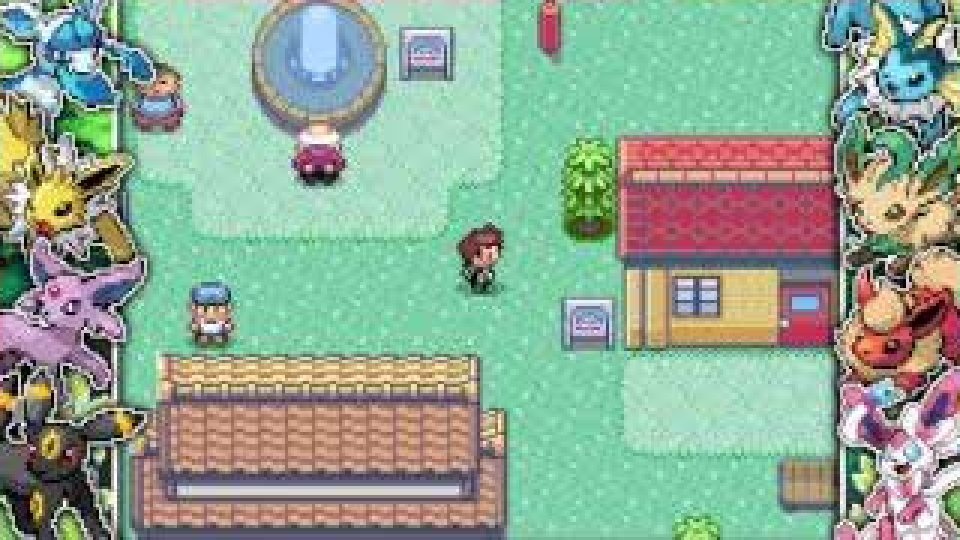
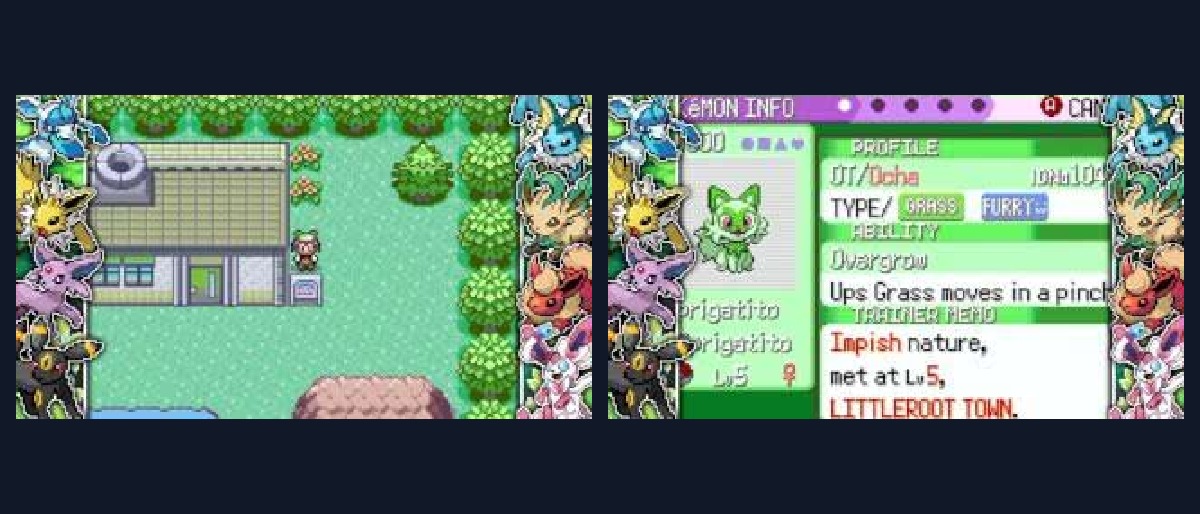
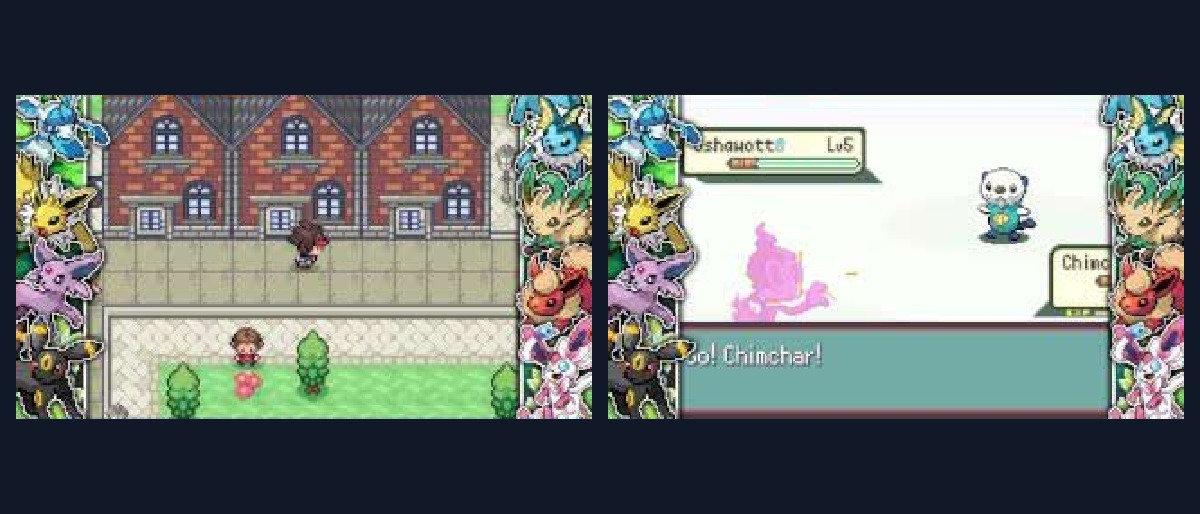
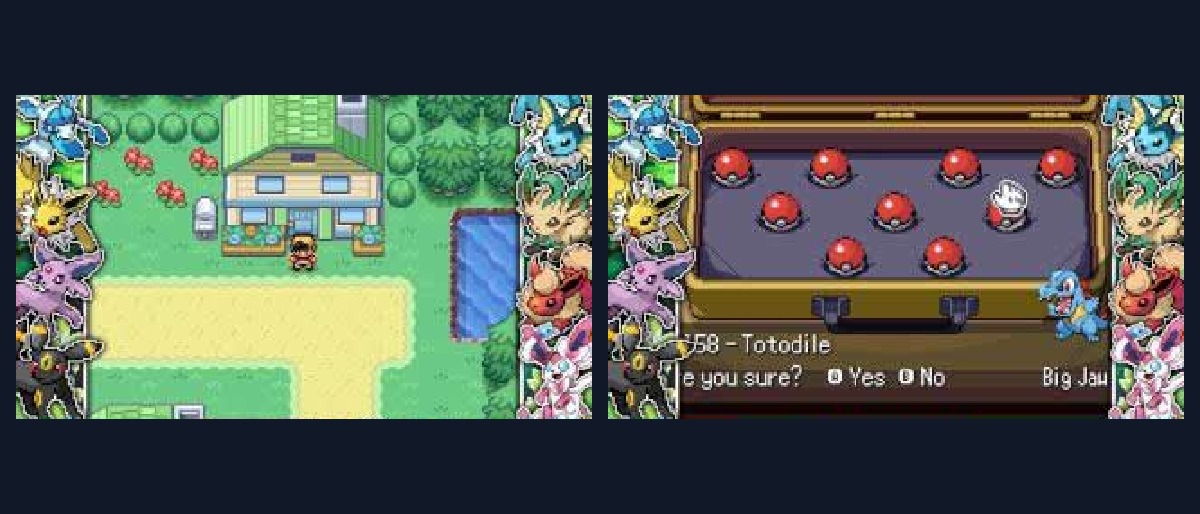
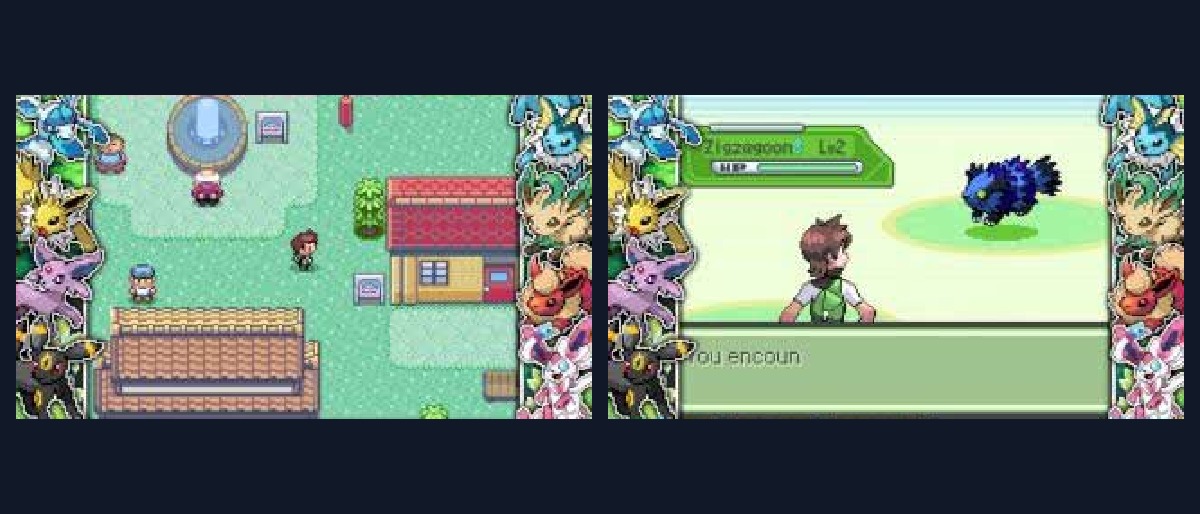
Omniversal Emerald footage from HDvee Plays, around 1:19. The cover and images are cropped video preview frames, not screenshots from Rebit.
Why a familiar species is not a familiar moveset
Visual recognition is useful for enjoying a crossover, but poor evidence for a battle decision. A fusion's typing, abilities, and learnset can matter more than the original Pokémon's reputation.
When you catch something new, inspect it before comparing it to your current team. Read its types, the categories of its available attacks, and the actual ability descriptions. Then ask what role it fills now: immediate damage, a safe switch, support, or coverage your party lacks.
This is especially important if you have played Emerald many times. A memorized team usually depends on several assumptions at once: where a species appears, how it evolves, what it learns, and which opponents it handles. A substantial crossover can change more than one of those assumptions. The old route map may still be useful while the old team plan is not.
Innate abilities add another layer to team building
The developer describes an innate system similar in concept to Elite Redux and PokéRogue, alongside new abilities. Treat “similar” as a design comparison, not proof that those games' exact rules, number of slots, or unlock conditions apply here.
The useful idea is that passive effects can be part of a Pokémon's identity beyond the familiar single-ability decision. Before replacing a teammate because another has higher visible stats, check the passives that support its role. Conversely, do not judge a fusion only by a powerful-sounding ability name; understand the trigger and limitation.
For a first team, keep the interactions understandable. If two Pokémon cover different weaknesses and their effects are easy to explain, that is a better starting point than six complicated combinations you cannot yet evaluate. Add complexity once you have observed how the current build handles it.
DexNav keeps exploration from becoming blind guessing
The project advertises DexNav and hidden “normal” Pokémon. That is a particularly appealing contrast in a world of mutations: finding a familiar unaltered creature can become a discovery of its own.
Use the encounter information available in your release instead of assuming that repeated random battles will reveal every possibility. If you want a specific normal species or fusion, check the project's notes for its conditions; “hidden” does not necessarily mean a standard grass encounter with a very low percentage.
Do not import DexNav instructions from another hack without checking them. The feature's presence establishes an exploration tool, not identical controls or encounter rules across every project that uses the name.
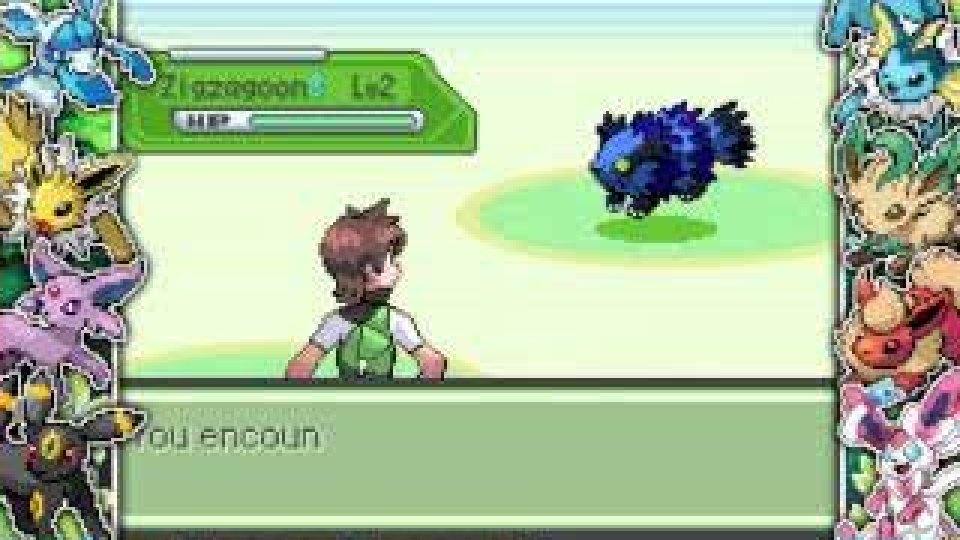
A crossover encounter shown around 0:55. The original species' appearance is only a starting point for understanding a fusion.
Level caps and specialized trainer pools change replaying Hoenn
Two documented features work together here: level caps with Cap Candy, and randomized trainers drawn from specialized pools. The first changes how you prepare; the second changes what you can safely memorize.
The presence of Cap Candy does not, by itself, establish its exact effect in every release. Read its current description. Do not assume ordinary Rare Candy behavior, unlimited cap increases, or a particular boss-based formula from a short feature list.
Specialized pools are also different from a completely unrestricted randomizer. A trainer can draw from an intended group without having exactly the same team in every run. That gives the encounter an identity while reducing the usefulness of a rigid “this trainer always sends out this species” script.
For practical play, prepare coverage and a fallback rather than one answer to one remembered team. If you lose, examine the actual opponent you faced. A walkthrough recorded on another seed or build may explain the route but not the precise battle.
A useful first-session plan
Start with the playable character you prefer; do not assume Ben or Gwen has a mechanical advantage unless the game says so. Read each starter option and choose one whose current types and moves you understand. Make your first normal save before experimenting heavily.
Spend the opening routes learning a few fusions well. Compare their abilities and coverage, try the encounter tools as they become available, and keep enough party variety to respond when a trainer's pool produces something unfamiliar.
The goal is not to solve all 400-plus designs immediately. It is to build a small working model of the game: what your team can handle, where its weak points are, and which documented tools help address them. That makes the crossover feel like discovery rather than a homework assignment.
Upload Omniversal Emerald to Rebit
Rebit does not supply Pokémon Emerald, Omniversal Emerald ROMs, or copyrighted downloads. Start from the creator's project links and follow the patch instructions with a backup you are legally entitled to use.
- Confirm the required Emerald region and revision in the beta package.
- Apply the patch outside Rebit and keep the unmodified base separately.
- Give the patched file a recognizable name that includes the release version.
- Open Upload in Rebit and select Game Boy Advance or Auto.
- Choose the finished
.gba, select Upload ROM, and wait for completion. - Launch the library entry and check that the expected crossover title and opening appear.
- Test controls, a battle, and a normal in-game save.
- Use Export In-Game Save from Rebit's menu, wait for confirmation, and reopen to verify progress.
The upload guide illustrates the file picker and library flow. A patch file is not a game file; placing only a patch inside a ZIP does not make it bootable.
On mobile, use normal speed while learning new move and ability text. Faster emulation does not help if it causes you to skip the information explaining a custom mechanic. Keep the app visible during upload and save export.
Beta updates and save safety
The public beta release announcement is a better reference for status than a download page that simply labels a file “latest.” Before installing a newer revision, check what changed and whether the author supports migrating your save.
Keep a copy of the old working build and an exported in-game save. Treat emulator states as build-specific. A state can preserve the older program's memory layout, so loading it into a changed ROM can reintroduce exactly the assumptions the update replaced.
Use Rebit's save tools to download a backup. Do not test version migration on your only copy, and do not assume a vanilla Emerald save contains the story and species data this overhaul expects.
Do I need to know Ben 10?
No prior knowledge is necessary to understand the broad Pokémon structure, but recognizing the alien references is a large part of the crossover's appeal. Judge each fusion by the game's descriptions even if you know its inspiration.
Is this online co-op?
This article covers single-player browser play. We have not verified Omniversal Emerald co-op or link compatibility in Rebit. Playing as Ben or Gwen does not imply two people can occupy both roles simultaneously.
Is there a less familiar battle-system alternative?
If you want to change the underlying rules even more, Pokémon Overcomplicated adds stats, types, and innate abilities with deliberately chaotic balance. Omniversal Emerald's distinct attraction is the Pokémon–Ben 10 fusion world.
Sources: the creator's feature announcement, beta release, and HDvee Plays' August coverage. This is a researched introduction and setup guide, not a full compatibility certification.