In most Pokémon adventures, your first question is which starter you like. In Odyssey II: Heroes of Lemuria, the more useful question is what your two Pokémon can do together. The sequel builds its identity around double battles, a trainer subclass choice, and a world whose familiar creatures do not necessarily follow familiar rules.
Pokemon Odyssey 2 is available as a demo, not a finished sequel. The lead developer's release post confirms the demo and says players reach level 25 by its end. Do not confuse it with the first Pokémon Odyssey or mistake a demo walkthrough for a complete-game guide.
For browser play, Rebit's GBA upload workflow is the relevant starting point: prepare the correct patched .gba file from the project's instructions, using a lawful base-game backup. The supported format is not a guarantee that every demo revision has been tested in Rebit.
What Heroes of Lemuria changes
The August 2026 HDvee Plays showcase describes a new story and region, eight subclasses, a large collection of reimagined Pokémon, an Aether type, sidequests, difficulty settings, and doubles as the standard battle format when your party supports it.
The footage makes the design direction immediately clear: cliffs, wooded paths, caves, and a character-creation menu that looks closer to a party-based RPG than a simple starter selection. That is the reason to try the demo. You are sampling a different combat and exploration structure, not merely chasing a larger Pokédex count.
The showcase's “300+ variants” description concerns the project's roster concept. It should not be treated as a promise that all of them can be caught before the current demo endpoint. Use the documentation linked by the developer for encounters available in your release.
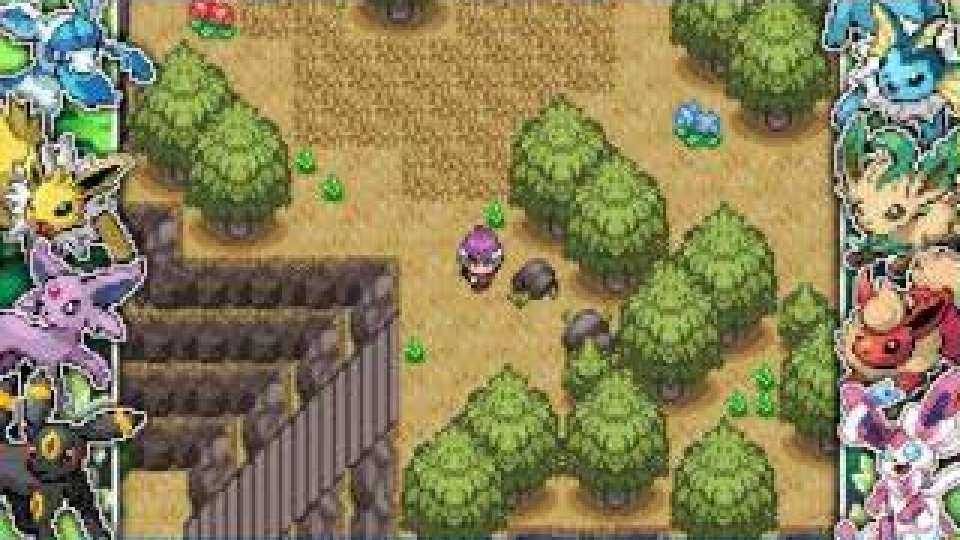
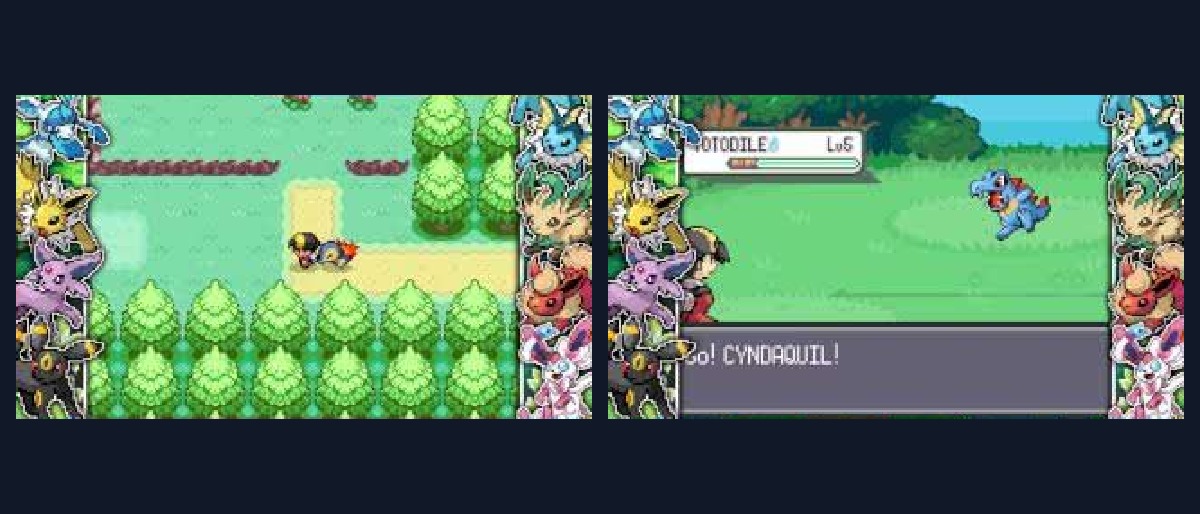
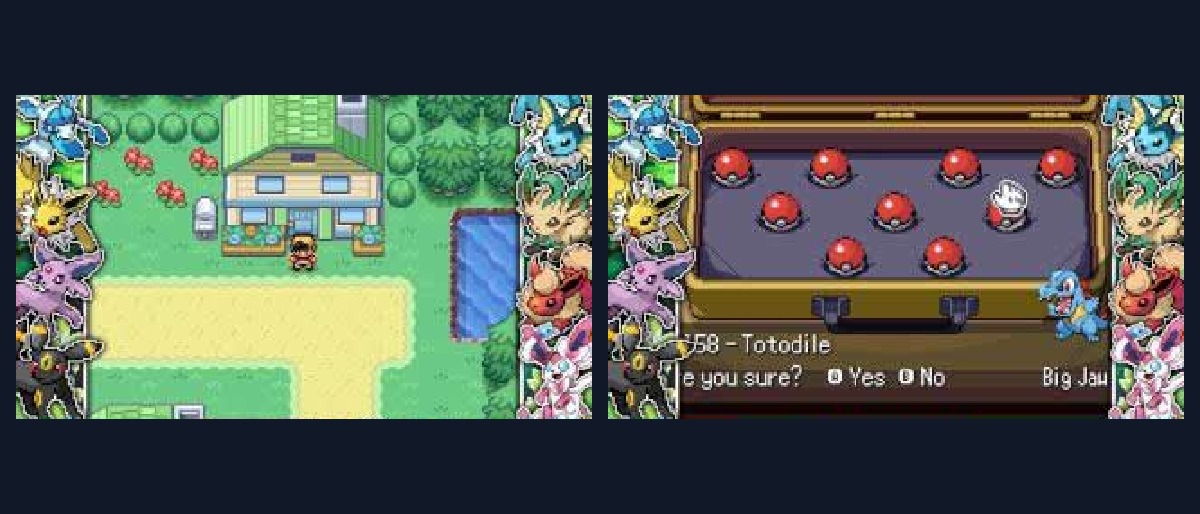
Lemuria gameplay from HDvee Plays, around 3:58. The cover and illustrations are cropped video preview frames, not screenshots of Odyssey II running in Rebit.
Eight subclasses: read the perk, not just the name
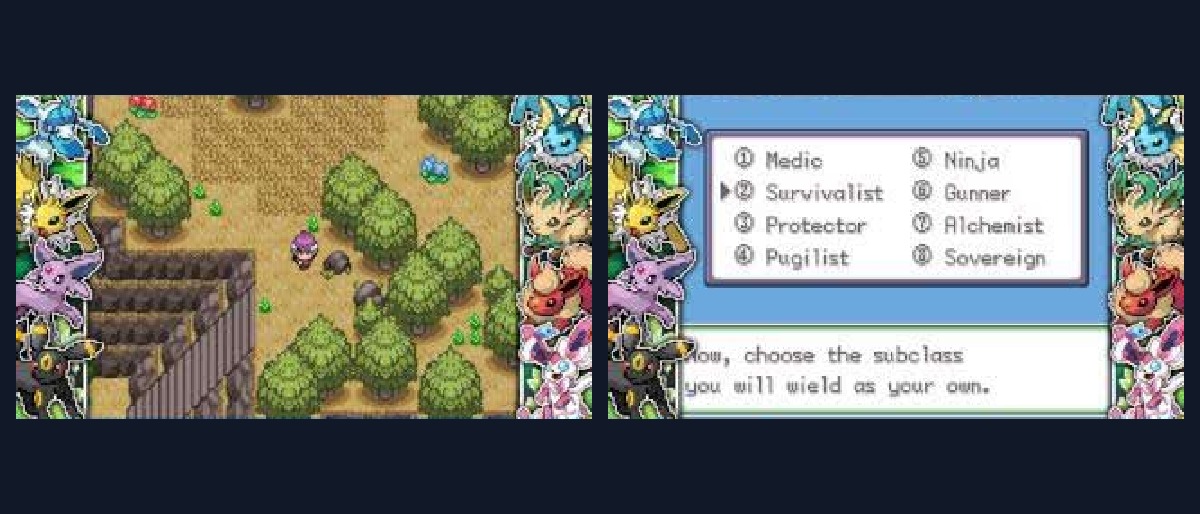
The showcased selection screen offers Medic, Survivalist, Protector, Pugilist, Ninja, Gunner, Alchemist, and Sovereign. The menu associates subclasses with starter pairs and perks. This means the opening choice is broader than selecting one species: it establishes an initial partnership and another layer of utility.
Resist choosing solely because “Ninja must be the fastest” or “Medic must be the easiest.” Those are class-name associations, not verified game rules. Read the displayed perk and starter information before confirming.
One visible example is Survivalist, whose screen pairs Rowlet with Jigglypuff and describes a resource-gathering perk. That is a good illustration of why the menu matters: a subclass can affect more than damage. The exact text in your installed release should decide your choice, since demos can rebalance perks and starters.
Before committing, ask yourself:
- Do I like both starting Pokémon enough to learn their roles?
- Does the perk support exploration, combat, or an activity I actually want to use?
- Can I explain what the two starters should do on the same turn?
- Am I choosing for this demo, or relying on an unconfirmed later evolution or ability?
A useful subclass is one whose perk you will actually use and whose starter pair you want to understand. Treat early “best subclass” lists cautiously unless they identify the demo version and explain their battle testing.
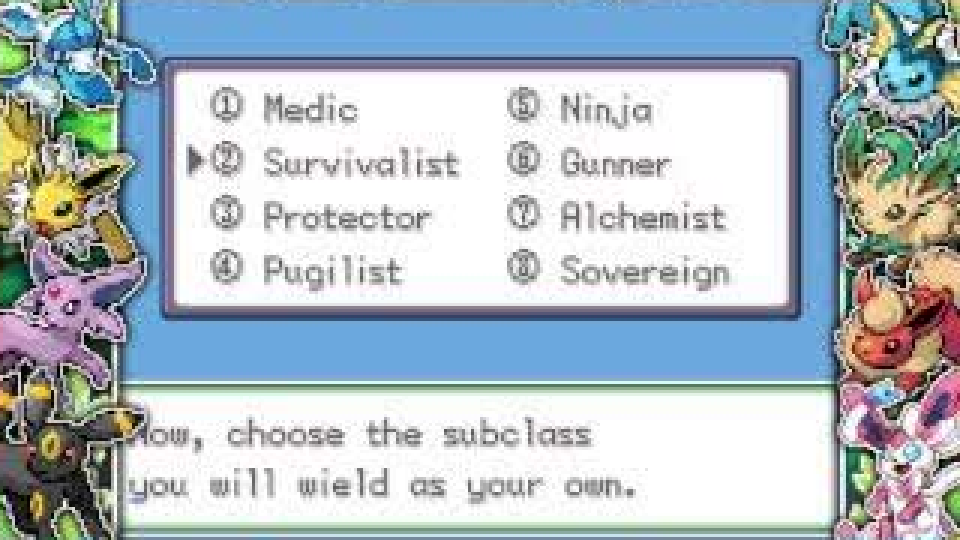
The subclass menu, around 4:08. Read the next information screen before locking in a selection.
How to think in double battles
Two attackers are not automatically a good pair. Doubles ask you to consider what both opponents might do, which target must be removed first, and whether one teammate can create a better turn for the other.
A simple starting principle is to identify the most dangerous opposing action. If both of your Pokémon can act before that threat, focusing it may prevent damage more reliably than spreading attacks across two targets. If they cannot, a defensive or support option may be more useful than a second weak attack. This is general doubles strategy, not a claim that a particular move is available to every starter.
Target selection deserves attention. Check whether a move hits one opponent, both opponents, the field, or an ally. A familiar animation does not excuse reading an unfamiliar variant's move description. Likewise, do not assume spread attacks and supporting effects have exactly their official-game behavior without checking the hack's rules.
When building beyond the starter pair, look for complementary roles. A reserve that helps the entire party survive a difficult matchup can be more valuable than a third Pokémon repeating the same offensive coverage. Treat switching as part of your plan rather than proof the lead pair has failed.
Perfect IVs and soft caps change preparation
The August showcase describes perfect 31 IVs and soft level caps. Taken together, those systems move attention away from breeding for hidden numerical advantages and toward team composition, moves, and turn choices.
A soft cap is also not the same thing as an unlimited invitation to grind. Read the current explanation of how experience behaves around the cap. If a boss is difficult at the intended level, review your partnership before spending an evening trying to overpower the progression system.
Choose a manageable difficulty setting while learning the game. Before starting a challenge run, check the project's current explanation of each setting; a difficulty label alone does not tell you which trainer teams, AI behavior, or numerical rules change.
Regional variants and the Aether type need their own reference
Odyssey II's variants can make visual recognition misleading. Knowing a Pokémon's official typing or typical move pool is not sufficient to know what this version does. Inspect its summary, ability, and moves when you catch it.
The same caution applies to Aether. The showcase identifies the new type, but a complete verified effectiveness table is not established here. Use the project's current type documentation; do not substitute a chart from another fangame that happens to use the same name.
For a useful first session, learn the pair you already have before adding several unfamiliar variants. That gives you a baseline. When you change a teammate, you can identify what improved instead of changing five variables and guessing why the next fight went differently.
Prepare the Odyssey II demo for browser play
Rebit does not distribute Pokémon ROMs or perform the project's patching steps for you. Start from the developer's release announcement, which links to the project listing and documentation.
- Confirm you are preparing Odyssey II: Heroes of Lemuria, not the original Odyssey.
- Read the exact base-game, region, and revision requirements. Do not infer them from another GBA hack.
- Apply the demo patch to a backup you are legally entitled to use, keeping the original file untouched.
- Open Upload in Rebit and choose Game Boy Advance or Auto.
- Select the completed
.gbafile, tap Upload ROM, and launch it from your library. - Test the subclass menus, movement, and battle targeting at normal speed.
- Make a normal in-game save and choose Export In-Game Save from Rebit's menu.
- Wait for completion, reopen the game, and confirm the saved party and location.
See Rebit's GBA browser-play overview for the general platform workflow. On a phone, make sure the battle target selector and move descriptions are legible. A controller can help with inputs, but reading the target remains your responsibility.
Treat a demo save as a separate adventure
Do not assume a future full release will accept the current demo save. Developers may change maps, species data, story flags, or progression. Preserve the exact demo build and its matching save so you can return to what works.
Before trying a new revision, export a normal in-game save and download a backup through Rebit's save controls. Keep emulator states associated with their original build. A state is a convenient resume point, not a conversion tool between versions.
If you encounter a repeatable bug, note the release, location, party, and last action. A concise reproduction is much more useful to a developer than “the browser broke.” First distinguish a demo endpoint from an actual softlock by checking the release notes.
Do double battles mean two-player co-op?
No. Doubles describe the battle format. One player can control two Pokémon. This guide does not establish shared-world co-op or Rebit link compatibility for Odyssey II.
Should I wait for the finished game?
Wait if you want a continuous, complete story and dislike restarting after updates. Try the demo if learning the subclass and doubles systems is already worthwhile to you. Neither choice requires treating an unfinished release as a finished product.
What should I play for a different kind of new region?
Pokémon Fluvio offers a Netherlands-inspired region and a field-research focus. It is also a beta, but its appeal is a different style of exploration rather than Odyssey II's party-building emphasis.
Sources: the Odyssey II lead developer's demo release and replies and HDvee Plays' August 2026 showcase. Combat suggestions are general strategy informed by the documented format, not a tested boss walkthrough.