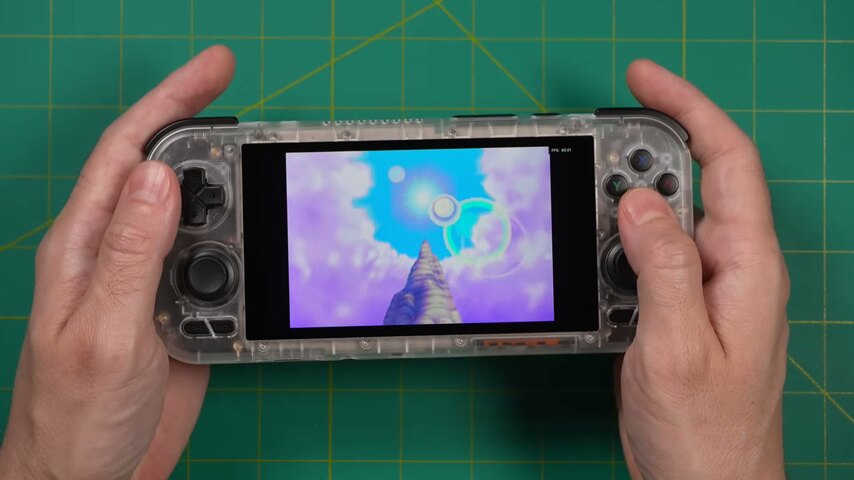
Sync Emulator Saves Between Devices Without Manual Folders
You want to sync emulator saves between devices because the newest progress should follow you from a PC to a phone, handheld, tablet, or browser without turning every gaming session into a folder-management chore. The risky part is that emulator progress is not always one file in one place.
This guide is only about your own save data and legally owned game files/backups. It does not cover where to get games, BIOS files, firmware, emulator cores, patches, third-party saves, or completed save files. The goal is safer progress continuity: protect the save that matters, test it on the destination, and avoid overwriting the only copy that still works.
Rebit can help supported user-owned browser play feel less like hunting through local folders, but no cloud-save workflow makes every emulator, core, save state, browser, game revision, device, or patch version magically compatible.
Quick answer
To sync emulator saves between devices safely, back up the original first, identify whether the important progress is an in-game/SRAM save or an emulator save state, copy instead of move, and verify the destination by loading progress inside the game. If you use a browser workflow such as Rebit for supported user-owned games, keep Manual, Auto, and In-game saves separate, use compatible .srm or .sav uploads carefully, and export/download recovery copies before risky changes.
A safe device switch usually looks like this:
- Save inside the game first when the game supports it.
- Copy or export the current in-game/SRAM or memory-card-style save before changing devices.
- Keep save states as secondary checkpoints, not the only long-term progress record.
- Confirm the destination expects the same game, system, save format, filename behavior, emulator/core, and core version when those details matter.
- Do not play on two devices independently until the newest save has been verified on the destination.
- Load through the game's Continue, Load, save-menu, or memory-card screen instead of trusting a file timestamp.
- Keep the rollback copy until several sessions prove the new workflow is stable.
Why emulator save sync is not just one folder
Local sync tools can be useful for experienced players. They can also hide dangerous assumptions.
A standalone emulator may store normal saves in one location and save states somewhere else. A phone may use app-specific storage or permissions that change after an update. A handheld may pause background sync to save battery. A desktop emulator may write the newest save only when the game closes. A sync provider may create conflict copies, upload an older file last, or download after you already started playing on device B.
Even when the file arrives, the destination may still reject it because of:
- a different save layer: state instead of in-game save, or thumbnail instead of progress
- a mismatched basename, extension, folder expectation, or import flow
- a different game revision, region, or patch/hack version
- a different emulator core, core version, settings profile, or state slot
- a browser/device storage behavior you did not test yet
- two devices writing separate progress before either copy was preserved
That is why the real finish line is not "the file synced." The finish line is: the destination game loads the expected progress and can save again.
Separate the save layers before moving anything
Before you transfer emulator saves, name the layer you are protecting. This one step prevents most accidental overwrites.
| Save layer | What it means | Best use | Main risk |
|---|---|---|---|
| In-game/SRAM save | The game's own progress: battery save, SaveRAM, .srm, .sav, EEPROM, flash, or memory-card-style data depending on system and emulator |
First layer to protect for long-term progress | Often more portable than states, but still not guaranteed across every game, format, emulator, or device |
| Manual save state | Emulator snapshot of a moment | Quick resume, retries, checkpoints, experiments | May require the same core, core version, settings, game revision/region, patch version, and platform behavior |
| Autosave | Background safety net created by an emulator or browser workflow | Recovery if you forget a manual checkpoint | Can preserve a stale, bad, or overwritten moment; not a backup plan by itself |
| Thumbnail/metadata | Preview image, timestamp, label, slot, or helper file | Recognition aid | Not proof that the saved progress loads |
In-game saves, SRAM, and memory-card saves
An in-game save is progress written by the game itself. Depending on the system and emulator, you may see it as SRAM, SaveRAM, battery save, .srm, .sav, EEPROM, flash, or memory-card data.
This is usually the best first candidate when you want to move save files between PC and phone or continue in a browser. The game can prove it through its normal Continue, Load, save point, password, or memory-card screen. That proof matters more than a file existing in a synced folder.
Still, do not assume universal compatibility. A save may depend on the exact game revision, region, patch version, filename, system, emulator behavior, or import format.
Manual save states
A save state is an emulator snapshot. It can be perfect for quick resume, retrying a boss, stopping mid-level, or making a checkpoint before a risky choice.
A state is also more fragile than an in-game save. Save states can depend on the emulator core, core version, settings, game file revision, region, patch/hack version, and sometimes the platform that created them. If a state fails on the second device, look for the in-game/SRAM save before assuming the progress is gone.
Autosaves
Autosaves are useful safety nets, especially in browser retro game saves and mobile sessions. But autosave is not the same as a deliberate backup. It can capture the right progress, an old load, a failed import, a bad state, or a moment after the wrong device wrote over the newer file.
Before a device switch, make a normal in-game save when possible and a deliberate manual state as a secondary checkpoint.
Backup-first checklist before switching devices
Use this checklist whether you use local folder sync, manual export/import, cloud storage, or Rebit.
On the source device
- Save inside the game if the game supports normal saves.
- Wait for the emulator or browser workflow to finish writing the save.
- Reload or reopen once on the source setup if practical.
- Create a manual save state only after the in-game save exists.
- Export, download, or copy the in-game/SRAM or memory-card save first.
- Keep the original setup untouched; work from a copy.
- Label what you copied: in-game save, SRAM, memory card, manual state, or autosave.
- Keep any known details that affect compatibility: system, game revision/region, patch version, emulator/core, core version, save extension, and filename behavior.
On the destination device
- Upload, import, or place only a copy of the save through the destination's compatible workflow.
- Wait for sync/upload/download to finish before launching the game.
- Use the same legally owned game file or a compatible revision whenever possible.
- Load through the game's normal Continue, Load, save point, or memory-card screen.
- Confirm the expected location, party, inventory, level, timestamp, unlock, or progress marker.
- Save again on the destination after the load works.
- Export or download a fresh backup from the destination if the workflow supports it.
- Keep the old rollback copy for several sessions before deleting anything.
Do not skip the boring parts. Do not test with the only copy. Do not assume a save state proves an in-game save transferred. Do not delete the source save after a thumbnail, file name, or timestamp appears on the second device. And do not include game libraries, BIOS files, firmware, emulator cores, patches, or third-party save collections in this workflow.
For a broader safety routine, use Rebit's guide to emulator save backup and transfer.
How to verify the destination load
A synced save is not verified until the destination game proves it.
Use a concrete test:
- Launch the destination game.
- Choose the game's normal Continue, Load, save point, or memory-card screen.
- Compare a real progress marker: level, map location, party, inventory, time, unlocked stages, records, or save-slot text.
- Play briefly only after you know the correct progress loaded.
- Save normally on the destination.
- Close and reopen once if practical.
- Export or download a new backup from the destination.
If you cannot prove the expected progress, stop. Preserve both copies. The wrong next move is usually overwriting the source with a destination save that only looks newer.
Where Rebit helps with browser retro game saves
Rebit is not a universal converter for every local emulator folder, Android path, cloud provider, standalone emulator, save state, memory-card format, ROM hack, unsupported system, browser, or device. It also does not provide game downloads, BIOS files, firmware, emulator cores, patches, third-party saves, or completed save files.
Rebit is for players who bring legally owned game files/backups and want to play retro games online in a browser with a clearer save workflow for supported systems. If you are starting from your own supported file, you can upload your own game file and play online, then organize progress around the game entry instead of a local folder hunt.
A calmer Rebit routine is:
- Sign in to Rebit.
- Upload your own legally owned game file for a supported system.
- Start the game from your browser library.
- Save normally inside the game when the game supports it.
- Use Open Saves to review Manual, Auto, and In-game saves separately.
- Use Save State for deliberate checkpoints.
- Use Export In-Game Save after saving inside the game when you want your own backup copy.
- Use Open Saves -> In-game -> Upload Save File when you have a compatible
.srmor.savfrom another emulator and want to test it in Rebit. - Use the save download action when you want a local rollback copy on your phone or computer.
For exact UI labels and screenshots, keep the Rebit saves, screenshots, and cheats docs nearby. Rebit's cloud saves for retro games page explains the broader browser/account save approach, while the guide to automatic cloud saves without folder sync covers conflict-safe habits in more detail.
The important product boundary is simple: Rebit can reduce local folder hunting for supported user-owned browser play, but you should still understand which save layer you are using and keep backups before major changes.
What Rebit does not claim
A safe save-sync guide should be clear about limits.
Rebit does not mean:
- every local emulator save state becomes portable
- every
.sav,.srm, memory-card file, or patched-game save will import perfectly - every browser, device, game revision, platform, emulator core, or core version behaves the same way
- your existing PC, Android, RetroArch, Steam, handheld, or cloud-drive folders are automatically watched by Rebit
- local folder sync is useless for power users who want direct control
- backups are no longer necessary
- game files, BIOS files, firmware, emulator cores, patches, or third-party saves are part of this guide
The narrower claim is more useful: for supported user-owned browser play, Rebit gives you visible Manual, Auto, and In-game save areas, compatible .srm/.sav upload, in-game save export, and download controls for your own save data.
Common problems and fixes
The file synced, but the game starts from the beginning
You may have synced the wrong layer, used the wrong filename, placed the save where the destination does not read it, uploaded an incompatible format, changed game revision/region, or launched before the source wrote the latest in-game save. Go back to the source copy, save inside the game, export/copy the in-game save, and test a duplicate.
My save state will not load on the second device
Save states are often core- and version-sensitive. Check whether the second setup uses the same emulator core, core version, game revision, patch version, settings, and state slot. If the state still fails, protect the in-game/SRAM save and create a fresh state after it loads on the destination.
I do not know which device has the newest save
Stop playing on both devices. Preserve every copy first. Compare timestamps only as clues, not proof. Test copies one at a time and trust the file that loads the expected in-game progress.
Can I use browser saves instead of Android folder sync?
For supported user-owned games, Rebit can reduce folder management by keeping save actions in the browser game workflow. You still need backups, compatible save formats, and a destination load test before you delete the old setup.
Should I sync saves and states?
Protect in-game/SRAM or memory-card-style saves first. Sync or export save states as secondary convenience checkpoints only if your destination can actually load them. A good routine keeps both, but gives them different jobs.
FAQ
What is the safest emulator save to sync between devices?
The safest first candidate is usually the game's own in-game/SRAM or memory-card-style save, because the game can verify it through Continue, Load, a save menu, or a memory-card screen. It is still not universal, so work from a backup copy and test the destination.
Do save states work between devices?
Sometimes, but save states are more fragile than in-game saves. They may depend on the same emulator core, core version, settings, game file revision/region, patch version, and platform behavior.
How do I transfer emulator saves from PC to phone without losing progress?
Save inside the game, copy or export the save file rather than moving it, keep the original untouched, use a compatible destination workflow, and prove success by loading the expected progress inside the game before deleting anything.
Can Rebit import .sav or .srm saves?
Rebit's docs describe uploading compatible .srm or .sav in-game save files through Open Saves -> In-game -> Upload Save File. Compatibility still depends on the game, system, source save, and destination setup, so test a copy and keep the original.
Are browser retro game saves the same as local emulator folders?
No. Browser save management can reduce local folder hunting for supported games, but you should still understand whether you are using a manual state, autosave, or in-game save. Export or download backups before risky changes.
What should I do before trusting emulator cloud saves?
Keep a separate backup, avoid playing on two devices before sync finishes, verify the destination load inside the game, save again on the destination, export or download a fresh copy, and keep the old backup for several sessions.
Does this guide explain how to get games, BIOS files, cores, or save files?
No. This guide is limited to your own save data and legally owned game files/backups. It does not link to or explain acquisition of games, BIOS files, firmware, emulator cores, patches, third-party saves, or completed save files.
Final recommendation
The safest way to sync emulator saves between devices is intentionally conservative: save inside the game, protect the in-game/SRAM layer first, keep save states as secondary checkpoints, copy instead of move, test the destination load, and keep a rollback copy until the new setup has proven itself.
If your goal is to keep playing your own legally owned retro games without memorizing emulator folders, try Rebit's browser library. Upload your own supported game file, keep Manual, Auto, and In-game saves separate, and use export/download before any risky device switch.