If you owned a Game Boy Advance back in the day, you probably played Pokémon Emerald solo or grinded through Mario & Luigi: Superstar Saga alone. That's what 95% of us did.
But the GBA had a secret multiplayer scene that most people never experienced.
The problem? You needed two GBAs, two copies of the game, and a link cable. Maybe four of everything if you wanted the full experience. That was a $200+ investment in 2003 money, and convincing three friends to buy the same game and carry link cables around was... ambitious.
So most of us missed out. The multiplayer classics sat unplayed, the four-party adventures remained theoretical, and entire genres lived and died on a feature nobody used.
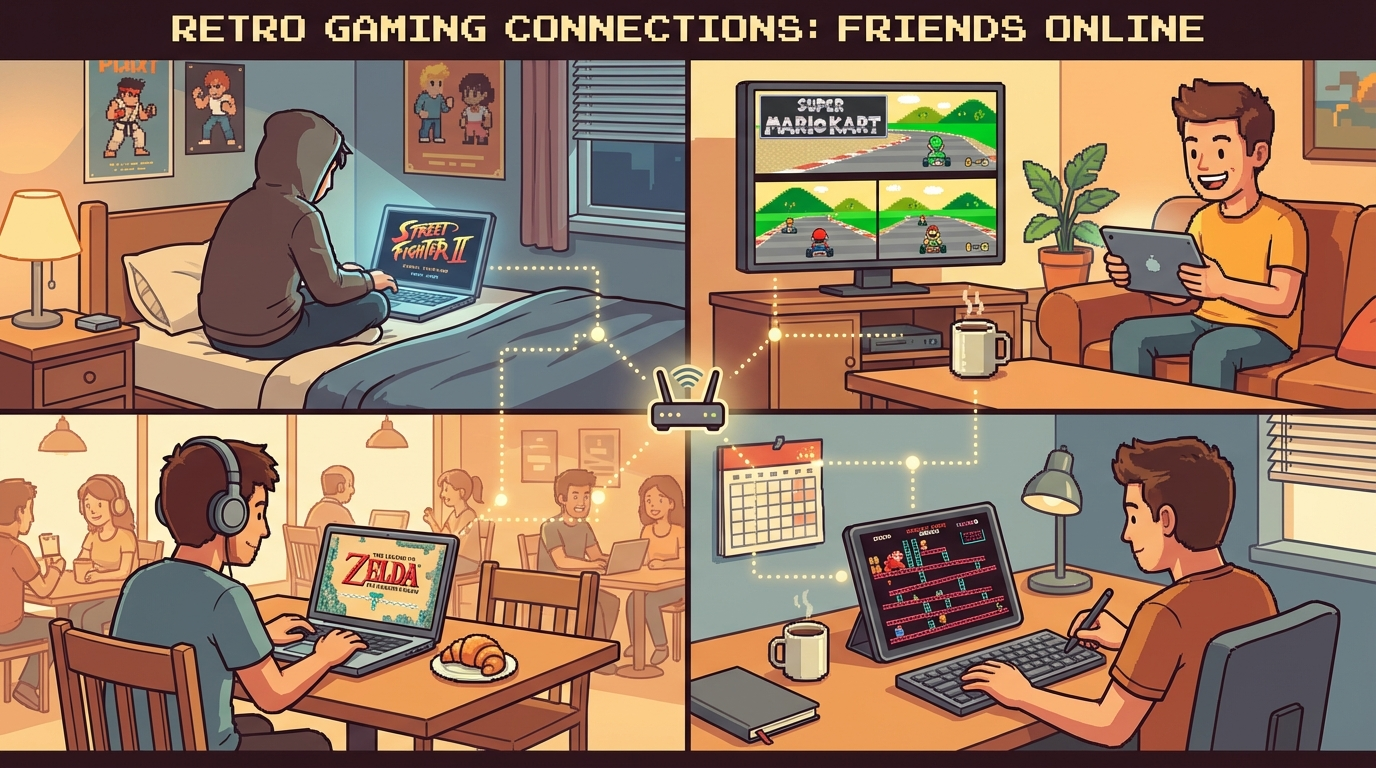
Rebit changes that. You can play GBA games online now—no link cables, no multiple copies needed. Just fire up a browser, invite a friend, and finally play the co-op games you missed 20 years ago.
Let's fix two decades of FOMO.
Why GBA Multiplayer Hit Different
The GBA wasn't just "SNES lite" for multiplayer—it had exclusive titles designed around portable play sessions. Short levels, drop-in-drop-out mechanics, and experiences built for 15-minute bursts between classes or on lunch breaks.
These weren't compromised ports. They were designed from the ground up for multiplayer portable gaming.
And here's the thing: some of the absolute best GBA games were multiplayer-only or severely gimped without friends. You literally can't experience the full game solo.
Five GBA Multiplayer Games That Deserve Your Time
1. The Legend of Zelda: Four Swords (2002)
Before Four Swords Adventures on GameCube, there was this GBA original—and it's still brilliant. You need four players for the real experience, each controlling a different-colored Link. Every puzzle requires teamwork. One player pulls a switch while another crosses a gap. Someone gets trapped in a cage, and the others have to figure out rescue.
Why it works online: Voice chat makes coordination infinitely better than shouting across a classroom. The netplay is tight enough for precise platforming, and you can finally play with four people without tracking down four GBAs.
2. Mario Kart: Super Circuit (2001)
Often overshadowed by its console cousins, this GBA entry deserves way more respect. 20 tracks, 8 characters, and rock-solid racing mechanics that absolutely sing in multiplayer. Battle mode is chaotic perfection, and the track design holds up.
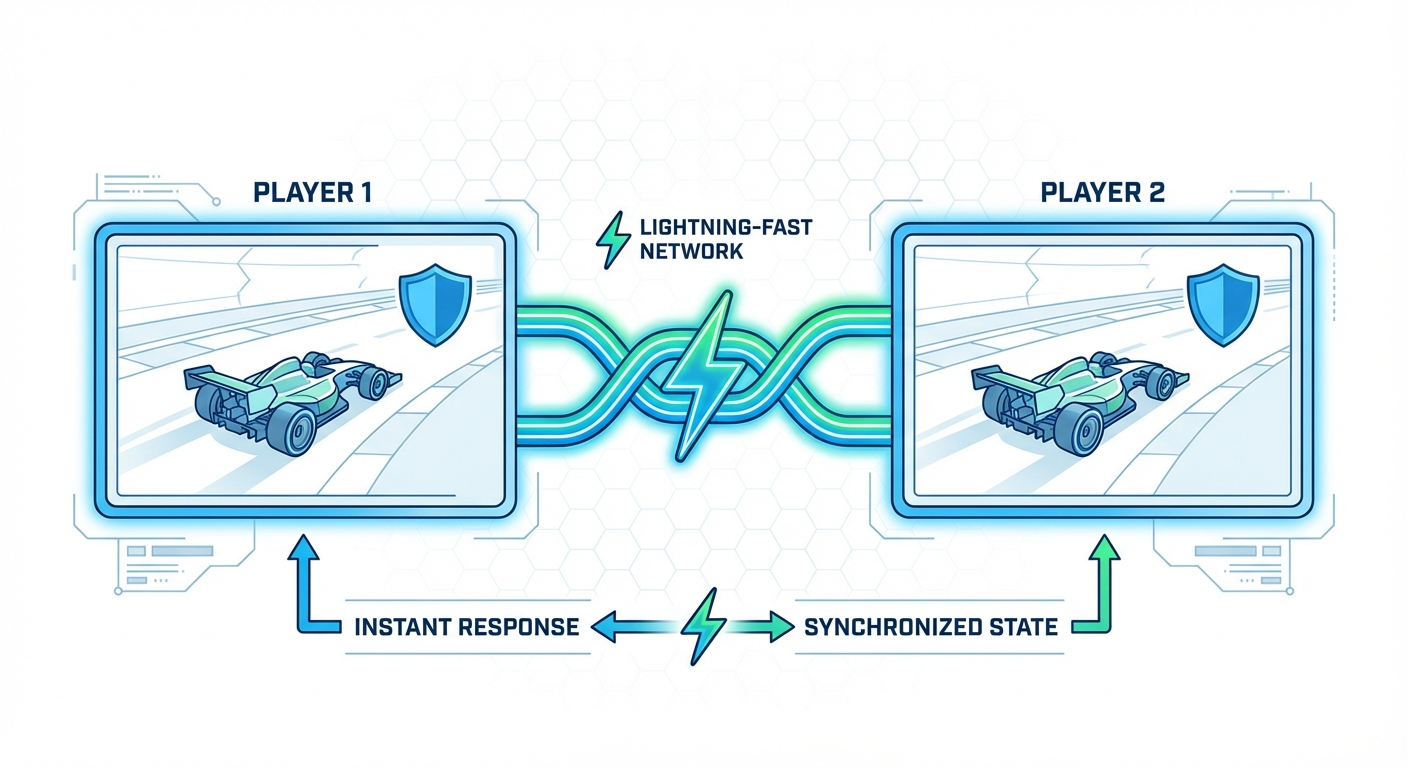
Why it works online: Minimal lag tolerance means you need good netplay infrastructure—Rebit's rollback code handles it. You're not fighting input delay while trying to drift.
3. Advance Wars 2: Black Hole Rising (2003)
Turn-based strategy is made for online play. No split-second reactions, no fighting lag—just pure tactical warfare. Advance Wars 2 is the peak of the GBA era, with deep mechanics, multiple COs with unique abilities, and maps that reward genuine strategic thinking.
Why it works online: The asynchronous nature means you can even play slow games over days. But real-time turns with voice chat strategy sessions are where it really shines—talking through your moves, reacting to unexpected deployments. It's chess with tanks and bombers.
4. Final Fantasy Crystal Chronicles (2003)
Wait, wasn't this a GameCube game? Yes, but the GBA multiplayer component was essential—each player used a GBA as a controller, managing their own inventory and seeing info other players couldn't. It was brilliant, expensive, and almost nobody experienced it.
The GBA version is its own thing—a standalone multiplayer action RPG. You explore dungeons, manage class abilities, and coordinate in real-time.
Why it works online: Everyone gets their own screen naturally (it's browser-based), so the GBA controller gimmick translates perfectly without buying four GBAs.
5. Kuru Kuru Kururin (2001)
You probably never played this. It was a Japan-first puzzle game about rotating a spinning stick through increasingly absurd mazes. The multiplayer mode is absolute chaos—you're racing through the same courses, trying to survive while your failures send your spinning avatar into walls.
It's simple, it's frustrating, and it's incredibly fun. The learning curve is steep, but the "just one more try" factor is through the roof. Watching friends fail in spectacular ways is half the entertainment.
Why it works online: Low bandwidth, simple inputs, and pure skill-based gameplay. The games are short—perfect for quick sessions. And the "I can't believe you just died there" moments are hilarious even over voice chat.
Setting Up GBA Multiplayer on Rebit
The process is straightforward, but there are some specifics for GBA titles:
Upload Your ROM
If you own the games, upload your ROMs directly to your library. Most GBA ROMs are tiny (4-16MB), so uploads take seconds.
Check Multiplayer Requirements
Some games require multiple ROM copies for each player. Rebit handles this automatically—you don't need multiple files. For titles like Four Swords, everyone connects to the same host instance.
Configure Controls
GBA games were designed for the layout: A, B, Start, Select, D-pad, and shoulder buttons. Map your controller accordingly, or use the touch controls if you're on mobile. Pro tip: create separate profiles for different genres—tighter deadzones for platformers, looser for RPGs.
Invite Friends
Generate a lobby link and send it. GBA netplay doesn't require powerful hardware—these games ran on 16MHz hardware, after all. Even modest laptops handle netplay easily.
Pro Tips for GBA Netplay Sessions
Voice chat is non-negotiable for co-op games. Four Swords without coordination is frustrating chaos with extra steps. Use Discord, Telegram, or whatever you prefer—just communicate.
For strategy games like Advance Wars, consider turn timers. Otherwise, you'll be waiting forever for your friend to decide between moving that tank or not.
Rotate players for party games. If you've got a group larger than the player limit, set up tournaments or round-robin sessions. Mario Kart is perfect for this—everyone races, winner stays on.
Document your house rules. Are you playing Advance Wars with fog of war? Are Four Swords rupees shared or competitive? Agreeing beforehand saves arguments later.
Dealing With GBA-Specific Netplay Issues
Input latency feels worse on fast-paced games. GBA runs at 59.7 Hz, and tight platforming can suffer from even slight lag. Use our lag-fix checklist if you're noticing input delays—usually it's a browser or routing issue, not the netplay itself.
Some ROM hacks don't sync properly. If you're playing patched games or translations, both players need identical files. Check file hashes if you're getting desyncs.
Screen size matters. GBA games were designed for tiny screens. Playing on a 27" monitor can make pixel art look rough. Use CRT filters or integer scaling if the aesthetics bother you.
Building Your GBA Multiplayer Library
Start with the essentials:
- Four Swords for co-op puzzle solving
- Mario Kart: Super Circuit for racing
- Advance Wars 2 for strategy
- Kuru Kuru Kururin for competitive puzzle action
Then branch out:
- Mario Golf: Advance Tour (surprisingly deep multiplayer)
- DK: King of Swing (physics-based co-op)
- Sonic Battle (fighter that plays better than it sounds)
- Mario Party-e (requires physical cards, but some fan implementations exist)
These games aren't just nostalgia—they're genuinely good multiplayer experiences that most people never played properly the first time around.
Ready to Finally Play These Games the Way They Were Meant?
No link cables. No convincing friends to buy copies they'll never use. No huddling around a tiny screen.
Just upload your ROMs to play GBA games online, invite friends, and experience two decades of missed portable multiplayer. The games are just as fun now as they were in 2003—arguably more so, since you can actually coordinate properly.
Already have your library uploaded? Jump into /retro-netplay and start hosting sessions. There are people looking for GBA multiplayer right now—you can be the one bringing these classics back.
Twenty years late is better than never. Your friends are waiting.